Book your course
We have various start dates to suit you. Contact us for more information
What is Child’Space®?
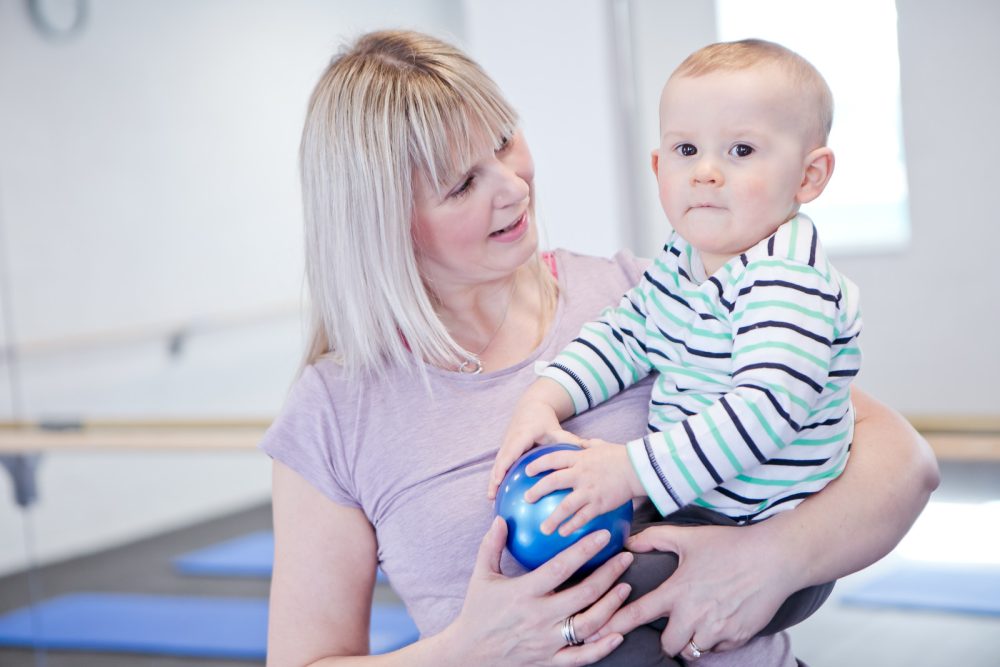
Child’Space® is a unique movement form of sensory learning for caregivers and babies based on The Feldenkrais Method®. It supports a child’s physical, emotional and psychological development using floor based activities. It includes touch, song, movement and play, with touch being a big factor since we are giving the baby what essentially is an FI®.
One of the most important elements of Child’Space® is that it meets the child where it is and it includes the parents/caregivers. As a practitioner we talk to the child as a human being in its own right, before we touch it, rather than only to talk to the caregivers about their child.
Touch, Movement and
Sensory Learning
A fundamental part of the method is tapping, squeezing and compression. We use these techniques to help the infant feel itself, to understand where its limbs are in space and so that we can map the various body parts into the brain map by bringing attention to the area that we are touching. We also use stomping and singing to soothe a baby.
The method never tries to force a baby into a movement that it can’t do itself, but we do recommend that the baby is placed on its various sides, including its tummy, so that it can feel its entire self. This is important because when the baby is in the womb it can feel itself against the sides of the uterus and towards the end of the pregnancy it feels compression. The baby is also used to hearing sounds, sensing vibrations and so through touch, we recreate those sensations for it once it is born so that it feels secure and safe. Holding a baby in a “c” position i.e. flexed to replicate how it was laying in the womb is important in the first few months and lessens tension in the abdomen which helps to reduce colic and can helps calm a distressed baby.
Early Attachment and Development
When a baby is first born and placed directly onto the mother’s tummy, skin to skin, it will crawl to towards the breast to feed. This is called the breast reflex and you can see the baby crawl, pushing with its feet and pulling with its arms. In the West, this has been forgotten and the baby is immediately taken away to have various checks done, rather than allow it to have this early contact with its mother.
The Origins of The Child’Space Method®
The Child’Space Method® was created by Dr Chava Shelhav and is based on the ideas of Dr Moshe Feldenkrais. In addition, the Method integrates knowledge from the fields of biology, physiology, psychology, mechanics and the interactive connections between them.
The ideas of Dr Feldenkrais regarding the roots of early infant development were the conceptual basis for Chava to develop Child’Space®.

FIND THE RIGHT CLASS FOR YOU
Speak to Ismini to discuss your requirements and find the best class for your needs.
We’re based within various locations in Tonbridge, Kent. Contact us by simply filling out the form below or by calling 07711 906750 and 07399 303480, alternatively email info@isministudios.com.
Awareness Through Movement
Feldenkrais is based around the development of awareness through movement where in every action there are four elements – thought, perception, sensation and movement. Of these, movement is the most accessible for invoking change and through which the other components can also be changed. Given that the body and mind are one, if you improve the movement, you will also improve physical abilities, as well as cognitive, emotional and sensory abilities which is why it is so useful for babies and young children since their brains can absorb information at a greater speed than an adult.
Brain Development in Early Childhood
Neuroscience now understands that the brain develops rapidly in the first years of life and especially in the building and pruning of neural networks. Repetition strengthens and grows new neurons whereas minimal use of a function leads to a paring down or pruning of the neural network making the function less accessible.
While there are theories that oppose intervention, babies do not always develop beneficially if left to themselves and in the last several decades we have seen children with difficulties in motor, behavioural, emotional and social difficulties.
Babies are born helpless, prematurely by the standards of other animal species which can walk as soon as they are born, and therefore they need an environment which can help them develop emotionally, physically and cognitively. Having caregivers that are present is critical to their development.
The Importance of Relationship and Attachment
In recent decades it has become clear that the relationship and attachment between babies and their parents/caregivers is integral to the child’s overall development.
Chava understood this and developed Child’Space® which focuses on the first, primary, years of life and meets the child where it is.
As mentioned above, it is during these years that the brain is developing rapidly and where Child’Space® can make a big difference to your baby’s development.
“
When you have a baby, so much emphasis is placed on whether they're reaching milestones like rolling, crawling and walking, but very little is said about how to support them in getting there, or how important healthy movement is from the beginning.
Ismini’s Child’Space sessions completely changed the way I looked at my baby’s physical development. Rather than focusing on achieving the next milestone, I learnt how to support her movement in a gentle, respectful way that gave her the confidence to explore what her body could do. Over time, I watched her naturally progress through rolling, sitting and crawling, and I’ve loved seeing her become increasingly aware of her own body - she’s now even pointing to different parts of herself.
The sessions have also been a special way for us to spend time together. I would recommend them to any parent wanting to better understand their baby’s development and support it in a thoughtful, nurturing way.